Legumes and a Sensitive Gut: Adding Lentils, Chickpeas, and Beans Gradually
Legumes do not need to fill a bowl to earn a place in your diet. With a sensitive gut, small portions, suitable preparation, and a look at the whole meal may help you find what works, without promising zero gas or asking you to push through pain.
Adi Way Editorial TeamPublished:
Start with your symptoms, not the cooking pot
If you generally feel well and want to bring legumes back, plan a simple trial. If you have new pain, persistent diarrhea, unexplained weight loss, or worsening symptoms of an established bowel condition, start with medical advice. A recipe change cannot investigate a new symptom, and a sensitive gut is not automatically irritable bowel syndrome.
Revisit what happened last time. Was it a little lentil stew, or a large plate of hummus with onion, pita, and a fizzy drink? Was the meal unusually large? Remembering that beans made you uncomfortable is understandable. Breaking the meal into its parts gives you a more precise starting point.
Why legumes can produce gas
The US National Institute of Diabetes and Digestive and Kidney Diseases, NIDDK, explains that bacteria in the large intestine produce gas as they break down carbohydrates that were not fully digested earlier. Legumes contain some of these carbohydrates, along with fiber. Some gas after eating is normal. Notice the discomfort and its effect on daily activities, rather than trying to eliminate every sensation.
Legumes also supply protein and other nutrients, so finding a tolerable form may be worthwhile. Still, you do not have to eat a particular bean that consistently causes problems. Alternatives can support a varied diet, especially when symptoms already make adequate eating difficult.
FODMAPs in kitchen terms
FODMAP describes groups of short-chain carbohydrates that may be poorly absorbed or digested. They can draw water into the bowel and undergo fermentation. Monash University, which researches this approach, identifies GOS and fructans as relevant carbohydrates in legumes. For some people with IBS, the amount eaten affects symptoms.
This is not an allergy, and the term does not mean a food is harmful to everyone. Fiber and FODMAPs are not interchangeable concepts either. Our explanation of fiber and IBS explores why simply adding more fiber does not work the same way for every person or situation.
Which legumes might be easier to try first?
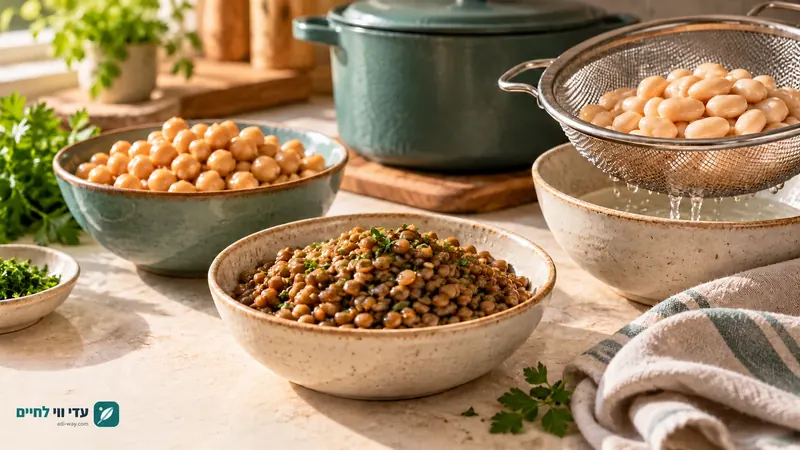
Monash's guidance on including legumes explains that canned or boiled-and-drained legumes can contain fewer FODMAPs because some water-soluble carbohydrates move into the liquid. Drained and rinsed canned lentils or chickpeas can therefore be convenient options for a small trial.
There is no universal ranking in which one lentil is always gentler than every bean. Serving size and preparation matter. Red lentils soften readily and work in soups or purees, but softness does not prove a low FODMAP content. Choose something you can prepare consistently and record what you actually ate.
Increase portions without a rigid timetable
Diabetes Québec recommends increasing the amount and frequency gradually. As a practical household example, you might begin with a small spoonful of cooked legumes alongside a familiar meal. If that is comfortable on several occasions, try two spoonfuls and later a somewhat larger addition. These examples are not tested FODMAP cutoffs or a prescription for everyone.
You do not need to increase the serving every day. Stay with a small amount, return to the previous amount if discomfort develops, or seek professional help. Avoid increasing legumes, salad, and a fiber supplement together. Changing less makes your response easier to interpret.
With canned legumes, draining is part of preparation
Tip the legumes into a strainer, discard the liquid, and rinse with water. Monash explains that soluble carbohydrates that have moved into the liquid remain available if you pour that liquid into your meal. When reducing exposure is the goal, adding it back defeats part of the purpose.
For an initial trial, plain legumes are easier to assess than beans in a complicated sauce. This helps separate a response to the legume from a response to other ingredients. Rinsing still cannot guarantee comfort. It is a preparation method, not an IBS treatment or a reason to continue eating through significant pain.
Dried legumes need soaking and thorough cooking
According to Diabetes UK, most dried pulses need soaking before cooking, while lentils and split peas generally do not. Follow package instructions, discard soaking water, and cook in fresh water until thoroughly done. Diabetes Québec recommends soaking in the refrigerator and cooking until the legumes mash easily with a fork.
Dried red kidney beans need particular care. Britain's Food Standards Agency warns that inadequately cooked beans contain potentially harmful lectins and that raw kidney beans should not be prepared solely in a slow cooker. Follow reliable instructions that include the required boiling stage. Canned beans have already been cooked, which can simplify both preparation and your trial.
A smooth soup is not necessarily low in FODMAPs
Blending changes texture; it does not strain out dissolved carbohydrates. A smooth soup can still contain a large serving of legumes. When all the cooking liquid remains in the pot, carbohydrates that moved into it remain in the meal. Monash cautions that cooking heat alone is not a dependable method of reducing FODMAPs.
If soup is appealing, try adding a small amount of separately cooked and drained legumes to a familiar soup base. This helps control the serving, without guaranteeing a low FODMAP meal. Keep the first recipe simple enough that you can repeat a successful version without reconstructing a long ingredient list.
Other ingredients can change the experience
Plain chickpeas and a seasoned hummus meal are different eating experiences. Garlic and onion, which Monash identifies as rich in fructans, can add to the meal's overall FODMAP load. NIDDK also notes that carbonated drinks and eating quickly can contribute to gas. Consider the plate and the eating habits together.
Pair the legumes with rice or another familiar food you tolerate, and use seasonings you know. Your first trial need not include every food you have been avoiding. For a family meal, set aside a plain portion of legumes before adding more complex seasoning to the rest.
Keep a short record that helps next time
Note the legume, whether it was canned or dried, its preparation, approximate portion, and accompanying foods. Add a brief description of symptoms and their effect on your activities. You do not need to track every sensation or score every bite. The aim is a useful pattern, not constant vigilance around food.
Our gut symptom diary guide offers a manageable approach. If a small portion works, you can keep it that way. Success does not require a full bowl. It may simply mean adding one food without worrying about the next meal.
When to involve a dietitian or doctor
NIDDK recommends medical advice when gas is bothersome, changes suddenly, or accompanies pain, constipation, diarrhea, or weight loss. Blood in the stool, severe pain, vomiting, or a swollen abdomen with difficulty passing gas needs prompt assessment, rather than another food trial. Seek urgent care for severe symptoms.
With Crohn's disease, ulcerative colitis, a known bowel narrowing, or instructions to limit fiber, discuss changes with your treating team. A low FODMAP approach addresses certain symptoms; it does not treat bowel inflammation. Monash describes a process that includes reintroducing foods and personalizing the diet, rather than permanently restricting all FODMAP groups.
Turn a small trial into a workable habit
Choose one legume, one preparation method, and a repeatable meal. You can portion prepared legumes into small amounts, following storage instructions, so another trial does not require cooking a new pot. If unsure about preparation or storage, use clear manufacturer guidance instead of an unverified online shortcut.
Judge progress by comfort, variety, and adequate eating. If avoiding symptoms means your diet keeps shrinking, ask for support even without an emergency sign. The goal is to include legumes where possible while keeping meals manageable and enjoyable.
This is general information and is not a substitute for personal advice from a doctor or dietitian.