
School Snack Boxes: Food Children Will Eat Without a Morning Battle
A useful lunchbox starts with familiar food, manageable variety, and safe storage. There is no need to invent a new menu daily: choosing together and brief evening preparation can help more than another elaborate sandwich that comes home uneaten.
Adi Way Editorial TeamPublished:
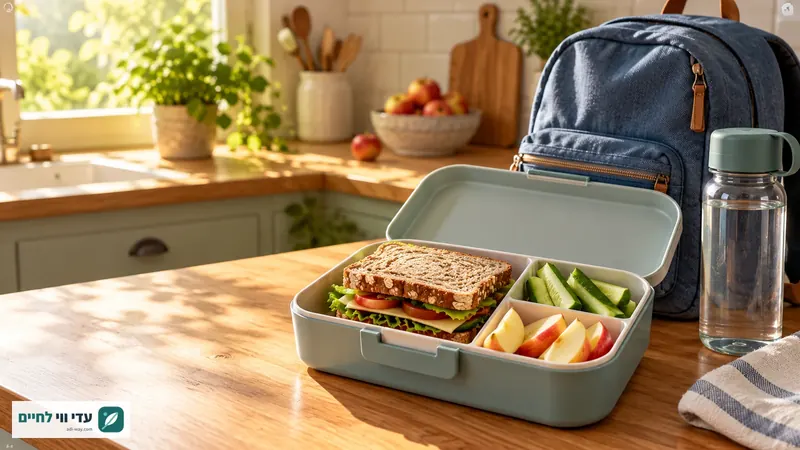
In brief: Choose a filling base, add protein and a vegetable or fruit, send water, and check what needs cooling. Adapt to your child and school policy without demanding an empty box at day's end.
Start with a simple structure and leave room for flexibility
The Ministry of Health's EfshariBari program suggests combining grains, protein-rich foods, vegetables, fruit, and water in children's meals. Its sandwiches and lunchboxes page, dated September 24, 2026, also emphasizes personal taste and allergy considerations.
For home planning, think of a few building blocks: bread or another base your child likes, a suitable filling, a plant-based addition, and water. This organizes shopping and preparation; it is not a form you must complete precisely each morning. Both contents and quantities can vary.
If a busy morning yields only a familiar sandwich and fruit, there is no need to declare the meal a failure. Consider the routine over time and what enables your child to eat during the day. This is no parenting test, and a photograph of the box need not measure success.
Choose two or three combinations you can return to
Start with pita, an omelet, and pepper strips; a cheese sandwich, cucumber, and fruit; or bread with a legume spread your child already eats. These are home examples, not an official menu. Eggs, cheese, and perishable spreads need cooling even inside sandwiches.
Keep a short list of agreed options on the refrigerator door. Check what is missing beforehand instead of asking an open-ended question every morning. If your child prefers separate ingredients, send bread and filling in different compartments, considering cooling conditions and the child's ability to assemble and eat them comfortably.
Even a simple box must work in practice: a lid the child can open, food that is easy to hold, and enough time to eat. Cutting and presentation should suit age and eating abilities, especially for young children. Expensive accessories are unnecessary for an accessible meal.
Involve children when there is time to think
Instead of negotiating at the door, offer a choice between two available combinations in the evening. A young child can choose fruit or add a napkin; an older child can make a shopping list and pack part of the meal. Responsibility transfers gradually, while an adult still checks safety.
Ask how eating works at school too. Is there somewhere to sit? Is the break short? Does the box leak? Sometimes children like the food but struggle to open its packaging or dislike touching a smeared filling. A small technical change can resolve what initially looks like picky eating.
Agree on a regular backup for days when an ingredient runs out or plans change. A familiar solution reduces rushed improvisation. Parents also need not choose each morning between major effort and a prolonged argument over available food.
In Israel's heat, packaging is part of the meal
A sandwich with cheese, egg, or a perishable spread cannot sit for hours in a hot bag merely because the box is closed. The US Food Safety and Inspection Service, USDA FSIS, recommends an insulated bag and at least two cold sources for a cold lunch. This is US safety guidance, not a binding Israeli instruction.
Chill ingredients beforehand, remove them from the refrigerator shortly before departure, and place cold sources around perishable food. An insulated bag slows warming; it does not cool food that is already warm. If school has a refrigerator, establish whether your child can actually use it, not just whether one exists in the building.
FSIS says perishable food should not remain unrefrigerated for more than two hours, or one hour above approximately 32 degrees Celsius. This is not a target time for planning food storage in a bag. Choose a suitable alternative if food cannot be kept cold. Do not taste questionable leftovers to test safety or save food for tomorrow when its storage conditions are unknown.
A returned lunchbox does not call for an investigation
Calmly ask what was convenient and what was difficult. Hunger varies daily, and an uneaten meal may reflect a late morning, busy break, changed texture, or a desire to play. Do not draw sweeping conclusions from one event or demand an explanation for every cucumber piece.
If your child consistently eats little at school, look at the broader picture. Ask staff about eating time and what happens during breaks. Pain, trouble swallowing, fear of food, or a steadily narrowing range of foods warrants professional advice.
Introduce new food at home, where there is time and patience. Keep something familiar in the school box too. Offer small variations without hiding ingredients or promising rewards for eating. The aim is a routine your child can participate in, not winning an argument.
A sensitive gut and allergies require individual adjustments
General recommendations for whole-grain bread, legumes, or fresh vegetables do not automatically suit every child with gut symptoms. With Crohn's, colitis, or other medical conditions, follow the care team's instructions, including adjustments during symptomatic periods. Do not remove broad food groups because of a general online tip.
Celiac disease requires strict gluten-free food and prevention of contact with gluten. For allergies, check every product's ingredients and warnings, and coordinate school policy and the personal treatment plan. A spread suitable at home may be prohibited in class because of another child's allergy.
A list of alternatives agreed with the treating dietitian is preferable to changing ingredients daily out of fear. For more on organizing shared meals, read cooking for a family with a sensitive gut, adapting it to your child's needs.
Water is the default, and sweets need not become a battle
The Ministry of Health recommends sending children with water. An accessible, easily refilled bottle can help more than a general demand to drink. Make sure your child can open it, knows where to refill it, and knows what to do if it is left in class. This preparation matters even on days that are not especially hot.
For snacks and sugary drinks, establish calm family guidelines and follow school rules. There is no need to label food bad or make a sandwich a condition for receiving candy. An occasional sweet does not cancel out the rest of the meal, but should not regularly replace food and water appropriate for the school day.
What can be prepared in the evening
Clean the box and bottle, check that cold sources are frozen, choose a combination, and prepare ingredients that keep well in the refrigerator. Perishable food stays chilled until packed for departure. Attach a short reminder to the bag instead of leaving the box on the counter so it will not be forgotten.
Every few days, review what worked and update the shopping list. If the same vegetable keeps coming back, change how it is cut or choose another. If the sandwich gets wet, separate ingredients. Address the specific problem rather than replacing the entire menu.
Questions on the way to the door
Must it be a sandwich every day?
No. Choose another base your child eats, provided it is medically appropriate and stored safely. A sandwich is convenient, not a requirement defining a successful meal.
What if they request the same filling again?
Keep a familiar anchor and gradually offer variety at other meals. If the range of foods becomes very limited, seek advice rather than applying pressure.
Must everything be finished?
Do not use an empty box as a measure of success. Over time, check that the meal is accessible, adequate, and appropriate for your child, without making every return from school a review.
The information in this guide is general and is not a substitute for personal advice from a doctor or dietitian.



