Cooking for Everyone, Eating Differently: How Not to Run a Restaurant at Home
Adi Way Editorial TeamPublished:
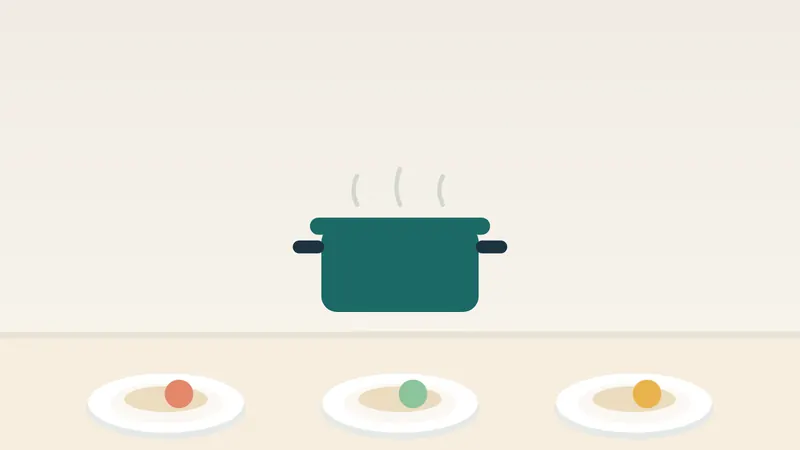
One pot. Two plates. Someone who cooks twice every evening gets tired and eventually gives up. Someone who cooks one base and adds extras at the end makes it through Tuesday too.
It is six o'clock. A child wants sauce. Someone wants no onion. The person at the stove is already calculating two meals and feeling angry at the illness, not the recipe. This article is about how not to run a restaurant at home.
A base everyone eats
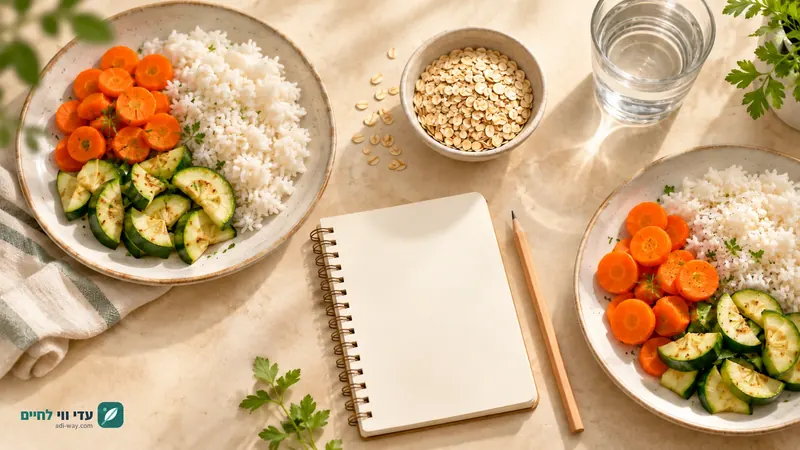
Chicken, potato, rice, a cooked vegetable, without aggressive seasoning. That is the pot. Spicy additions, raw salad, fried onion, and rich sauce come later, for anyone who wants them, in a separate bowl on the table. Not in the pot "because it would be a waste."
The base does not have to be bland. Salt, olive oil, herbs, lemon. Enough for the whole household to enjoy, while still allowing someone with a sensitive gut to eat without overthinking it.
Additions go on the table, not into the pot
This is the principle that holds the whole method together. Anything that might cause trouble is served separately. Everyone assembles their own plate. Children get their favorite sauce, adults get spice, and whoever needs it gets the plain base. Nobody receives "sick person's food," because everyone eats from the same pot.
Children do not need the entire diagnosis
They need to know there is food Mom or Dad is eating tonight, and there are additions. No drama. Drama turns the plate into a topic of conversation, and the plate is already full enough.
Older children can understand more and even help. But the explanation stays at their level: "My stomach does not like onion," not a lecture on inflammation.
Cook once for several days
A double batch of the base becomes tomorrow's meal and a work lunch for the following day. Rice for three days. Chicken for two. A fresh vegetable on the day of eating. Cooking this way means fewer evenings at the stove and less improvising with foods that cause bloating. We explain how the base becomes packed lunches in packing lunch for work with a sensitive gut.
When you have no energy to cook
The same base from yesterday. Or pita, an egg, and a cooked vegetable, if tolerated. An evening of ready-made food with one familiar component is preferable to fasting out of frustration. A perfect menu feeds nobody.
Bread, pasta, and substitutions for one person
In some households, one family member does not eat gluten because of celiac disease or another recommendation. Here too, the base can be shared: rice and potatoes suit everyone, with bread on the side. Anyone wondering whether to remove gluten at all should first read gluten without celiac disease: when removing it from the diet is actually assessed.
Guests
Explain in advance what will be served, without a long apology. Anyone who wants to bring a dish can do so. The table does not have to prove the home is "normal." A home where everyone eats from the same pot with different additions is exactly a normal home.
The cook needs a plate too
Someone who cooks for everyone and forgets themselves ends the evening hungry in front of the refrigerator. The base needs to suit the cook too. If the sensitive stomach belongs to the cook, build the pot around it and give everyone else additions.
This is general news information and is not a substitute for personal advice from a doctor or dietitian.