
Just Thinking About ____ Makes Me Tired
Adi Way Editorial TeamPublished:
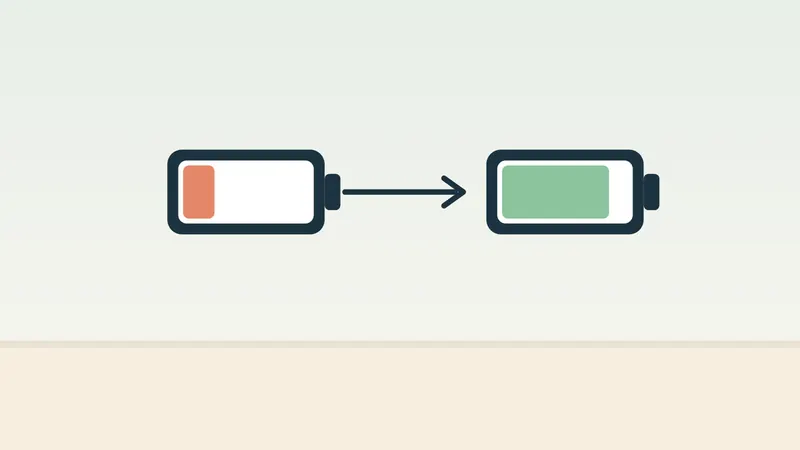
What recharges us and what drains our energy
I will begin with a patient's story. Let us call her Gili. Gili is a religious woman, married, a proud mother and grandmother, doing work she loves and living with genetically linked colitis (all the siblings in her family have some form of bowel disease). Gili sought treatment because her disease had worsened. Her goal was to reach remission through nutrition and a change in thinking.
As we worked together, we tailored the best diet for her. Her bowel movements improved, as did her general well-being, until another flare-up arrived. We again worked on breathing, guided imagery, and dietary changes. Gili improved, then had another small flare-up.
We began exploring her emotional state more deeply, and a particularly painful issue surfaced: one of her adult sons, married with a child, was in conflict with the family. Gili was angry, offended, hurt, and missed him. The estrangement from her son clearly caused her great pain. We identified this conflict asan energy drain for her.
Energy drains are situations that leave us feeling below our best: tired, irritable, sometimes very hungry. For example, an argument with a manager or husband, boring work, a hospital visit, or even a meeting with someone that apparently went smoothly. Do you recognize any in your life?
In other situations, by contrast, we feel beautiful and happy, full of strength and motivation, as though we are growing wings. These are situations that recharge our energy . They might involve a sport we love, time with a good friend, creative work, or a walk in nature.
All of us find ourselves in both kinds of situation at different times.
The question is what we do with it!
According to Dr. Tal Ben-Shahar, a leading figure in positive psychology, we need to decide and remind ourselves what our ultimate currency is.
If, for example, financial standing is our ultimate currency, we will choose a profession for its earning potential rather than our personal inclination, or stay in unfulfilling work simply for the salary. If our ultimate currency is a sense of justice, we may be willing to destroy relationships on the altar of our own justice (which, incidentally, is always subjective).
Our ultimate currency guides our choices in life, our perceptions, and our sense of happiness.
Sometimes we follow someone else's currency without even realizing it. If our parents believed that accumulating assets should be a guiding principle in life, we may choose our steps in the same way. Theproblem begins when that path does not satisfy us and we carry feelings of missed opportunities, emptiness, lack of enjoyment, stagnation, constant difficulty, indifference, and low spirits.
Sometimes we do not even understand the problem. It is hard to admit to ourselves that something we do or think, does not match our true currency of happiness. But our body understands and expresses this without words. Abdominal pain, headaches, and other unexplained aches can result, among other things, from frustration and emotional pain. Pain we are not sufficiently aware of, or cannot admit to ourselves exists.
Jeff McDougall, a psychoanalyst, describes many such cases in "Theaters of the Body." It turns out that Freud and Jung, the great psychologists, already discussed the nonverbal expression of emotional pain through the body. All mention digestive diseases as among the clearest expressions of unresolved psychosomatic distress.
What does this mean? Do not worry; nobody is accusing you of inventing the disease. In the past, a mistaken interpretation of "psychosomatic" was common. People thought psychosomatic symptoms meant patients imagined them and there were no underlying clinical findings.
That is not what it means! The idea of psychosomatic illness is that a person's subconscious cannot find verbal ways to express certain distress and therefore has to retreat to a preverbal, physical expression. This is how small children express anxiety or fear. To put it simply, if a person has not had enough opportunities to learn to express themselves, their feelings, needs, and wishes verbally, or has not felt safe enough to do so, their body will express them unconsciously.
Conditions described as psychosomatic include asthma, high blood pressure and heart disease, inflammatory bowel disease, and autoimmune skin conditions. In recent years we have also heard about diabetes developing after a crisis. Emotional eating, and the obesity that may accompany it, of course have a "place of honor" on this list.
I experienced the power of the mind myself: for years, I suffered respiratory allergies and shortness of breath. The symptoms all began around the third year of my first marriage and ended... you guessed it, after 10 years, with divorce. At the time, incidentally, I had not yet studied the close relationship between mind and body. I simply remember that strange morning when I woke without a runny nose. A suffocating runny nose had been part of every morning for about seven years. I had become so used to it that I could no longer imagine life with a clear nose and easy breathing. I never left home without tissues, missed workdays and trips, and suddenly it was gone. It took several more weeks to realize it was really over, and several more years before I went to study these connections. Today I wonder: if I had known then what I know now, and had sought other forms of treatment alongside allergy medication, might the divorce have been avoided?
So what should we do, you ask?
There is no need to rush to replace your job or your partner. Nor do you need to return to childhood or blame your parents for anything.
But there are certainly things we can do today as self-aware adults. For example, we canrelearn how to listen to our emotions, identify and acknowledge them, and recognize the bodily sensations that accompany them. We can learn to "speak" our emotions instead of eating them or feeling them as abdominal pain.
That is what we did with Gili (remember her from the beginning of the article?).
After identifying the source of her emotional pain, her energy drain, we worked on her ability to remain in that place, hold it, and express the full range of emotions she experienced there. Feeling an emotion also means being present with the physical sensations it creates. We worked on that too. Later, Gili learned to accept herself and all her feelings without being angry at herself or trying to sweep them "under the rug." She discovered that ignoring her emotions was directly connected to her colitis flare-ups. As she became more willing to accept herself there, she also allowed herself to strengthen the areas that recharged her energy. This was not an escape from the painful place, but another experience taking up space in her life: time with grandchildren, her interesting work, the dance class she joined, even the coaching process she underwent with me. The tools she gained enabled her to listen to her body and accept its signals, believe it, and respond to it. For example, she understood that her efforts to please her son and daughter-in-law drained her energy, harming both her and other family members. By contrast, accepting her son and letting him know she was there whenever he chose allowed her to remain more balanced.
Our ultimate currency is what we choose for ourselves. Ideally, it should make us happy, fulfilled, at peace with ourselves, accepting of ourselves, and able to be who we are. Reexamining our choices is not easy, but it does not mean we must turn our lives upside down. Perhaps by properly identifying and understanding situations that drain us and bringing in more that recharge us... we may also move closer to the health we hope for...
Emotional, cognitive, and behavioral treatment must be guided by an experienced, sensitive therapist or coach.
Meanwhile, you can begin identifying the places and situations that exhaust and drain you and try to reduce them. Also identify and strengthen the situations that recharge you and make you feel good!
This is general news information and is not a substitute for personal advice from a doctor or dietitian.



