Smart Shopping: Breaking Free of Emotional Buying and Eating
Adi Way Editorial TeamPublished:
Smart shopping on the path to health
Summary:
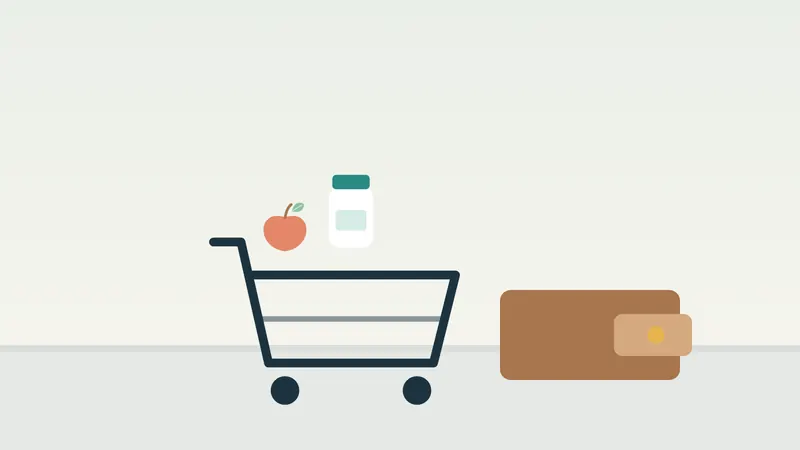
What we buy and what we eat have a major influence on our health. Whatever goes into the supermarket cart while we shop will later go into our bodies. Emotional buying is very similar to emotional eating. Both result from difficulty coping with painful feelings. Responding to advertisements without examining them closely can "burn a hole in your pocket," leave your closet overflowing with unused items, and lead you to eat foods that do not support your health. Here are some points to consider and tips for smarter shopping.
I will begin with a personal story:
Twice in my life I found myself acting out of emotion, without any judgment. I also still "fall" victim to the sales catalogs that arrive in my mailbox. Today I have chosen to share my personal struggles with you and use them as a starting point for recommendations.
Story A: emotional eating.
Story B: emotional buying.
Story C: I did not know I needed that.
Story A: emotional eating.
After the birth of my second child, my son, I found myself experiencing postpartum depression. It was 1994, and although I had experienced something similar after the birth of my eldest daughter four years earlier, it still did not feel official enough. People still did not talk enough about the common phenomenon of postpartum depression. I still felt the expectation around me to be the perfect, happiest mother. Those expectations were clearly unrealistic, because who said every woman goes through the same process immediately after giving birth? Although this child was very much wanted, I still struggled greatly with the load. The physical load: recovering from the trauma of childbirth, getting little sleep each day, needing to be present for my daughter, who was only 4, and needing to fulfill all the roles of a married woman, including cleaning, cooking, laundry, caring for the children, and paying attention to my husband. On top of everything, there was nonstop breastfeeding. The emotional load: continuing to smile at everyone, giving love, and coping with the baby's crying. I fell apart. I cried over every little thing. I carried intense feelings of frustration, exhaustion with life, anger toward everyone, and most of all, deep guilt toward myself. Of course, I had no skills for holding these difficult feelings, and I was ashamed to ask for help. The intuitive solution came in the form of food. Chocolate became my closest friend. I bought bars of milk chocolate on every walk with the baby in the stroller. I bought them secretly, ate them secretly, and hid whatever remained. I found myself hiding half-eaten chocolate between the books on the shelf in my room. It was mine, it was always available to me, and it made me feel good for a few moments. I ate kilograms of chocolate over several months. I was truly addicted.
Story B: emotional buying
Evening. I am returning from an exhausting day at work. I drove a lot, went to many places, and spoke to many people. Some goals were achieved; others were not. I am tired and irritable. I know an evening of cooking and my son's homework awaits at home, followed by answering emails. The steering wheel seems to turn left by itself, toward the shopping center. I park, and with a lightness in my step that surprises even me, head straight for the clothing and shoe stores there. An hour of shopping, almost 1,000 NIS spent, feeling wonderful, driving home. "Well, it is too late to cook now. Kids, let's order pizza." Another 100 NIS spent.
Story C: Oh, I did not know I needed that
Midweek, a routine trip to collect the mail. Among the envelopes telling me how much I spent last month on water, electricity, gas, food, cleaning products and toiletries, shoes and clothes, entertainment and insurance (lots of insurance), a small catalog appears. Friendly-looking, with smiling people on its cover, it invites me to peek inside. I sit down with a cup of tea and begin turning the pages. Until that moment, I am a whole person, content with what I have. 10 minutes later, I am a frustrated person with serious gaps in my life! Discounts, special offers, pictures, and advertisements call on me to fulfill my deepest dreams. They reveal that I do not have:
An elegant leather wallet for 49 instead of 149 NIS.
A diamond ring for 2,500 instead of 3,700 NIS.
An orthopedic pillow for just the shipping charge: 39 NIS.
Elegant satin bedding at a bargain price of 200 instead of 590 NIS.
A pot for healthy cooking for only 99 instead of 199 NIS.
Bestselling books await me at the amazing price of just 29.9 NIS.
And my dream vacation is only $300 away.
In short, I suddenly discover that paradise is right in front of me, and I am doing nothing to take advantage of all these incredible savings! After all, if I buy the healthy-cooking pot through the catalog, I will save 100 NIS! If I buy that wonderful necklace, I will save another 1,000 NIS. So many savings!
And so begins the test of my resistance to this shopping temptation…
Those are the stories.
Now let us get to work:
What similarities and differences did you find between my emotional eating and emotional buying?
If you answered, difficult feelings that I did not enjoy experiencing, you are absolutely right!
In my view, everything starts and ends there: we, as Westerners, were not taught to cope with any negative emotion. Notice how we communicate with our children: "Are you having fun or not? Are you crying? Here, have a sweet! Someone hurt your feelings? Get back at them. Failed a test? The teacher is to blame. Feeling sad? Eat something. Studied hard? Let's buy you something." And, to me, the peak is: "Stop crying! I cannot listen to it!" All of this sends one message: a negative emotion is the worst thing that can happen to a person. We must do everything possible to avoid an unpleasant feeling, even if the action used to relieve it has nothing to do with its cause.
The result: compensatory behaviors. Instead of learning to cope with a negative emotion, we look for any way to escape it.
Sadness is unpleasant, so I eat chocolate because its taste creates a pleasant feeling.
Frustration is difficult to bear, so I buy new shoes because getting something new feels pleasant.
Missing something is a negative feeling, so I seek immediate gratification by buying a product. There: "I have" feels much better than "I do not have" (regardless of the question, "Do I even need this?").
But let us ask ourselves honestly: how much will buying a vacuum cleaner compensate for my sense of lack? True, if I use a vacuum cleaner to clean my home and the one I had broke, I probably really need one. But if I have 4 dresses in my closet that fit, along with several shirts and pairs of pants, how much do I really need a fifth dress?
If I have pots in the pantry, how much do I really need the pot on sale?
If I ate lunch an hour ago and feel full, how much do I need chocolate? Perhaps what I actually need is a little rest. Perhaps sitting comfortably in a chair, relaxing my body, and closing my eyes for 10 minutes would do the job?
Our response to advertising is astonishing! We claim to be immune to advertisements, but after our children have been repeatedly told that a particular snack will make them more popular, or that filled breakfast cereal will make them happy, we go out and buy what they ask for.
Advertisers know we buy the good feeling, not the product! That is what they sell us when they show Bar Refaeli in a new FOX tank top, or a man spraying on deodorant and becoming the darling of every woman in the neighborhood. Ask yourselves: what is G. Yafit, the Israeli advertising personality, really selling us when she promotes Mama Of schnitzel, laundry detergent, and capsules for a new diet with the same enthusiasm? (P.E.R.I.O.D…..) What are Israel Discount Bank and Mizrahi-Tefahot Bank really selling us?
Exactly: they are all trying to sell us a good feeling, a sense of happiness.
Does our happiness really depend on tasty food, our pants size, the jewelry we buy, or the bank that receives our salary?
I have found my own solutions to these situations, and I invite you to enjoy, as I do, the freedom to decide. To manage my bank account and my health account with the same clear judgment.
So let us answer all the promises above:
- 1. First, ask yourselves how much you really need this product or food. Ask yourselves, "Would I buy this even if this special offer or snack were not staring me in the face?"If the answer is "No, but…", stop. That is the truth; everything else is an excuse.
- 2. Remind yourselves: I may save X shekels, but meanwhile I will make an unplanned, unnecessary purchase. For example, the healthy-cooking pot - buying it will itself cost about 100 NIS. Jewelry - I may save 1,000 NIS, but I will spend another 1,000 NIS. Put it this way: I will not receive 1,000 NIS; I will spend it! Books - two books I bought at the last Hebrew Book Week still stand on my shelf, and every year I clear countless books from my home that were read, or merely bought during Book Month and left to gather dust.
- If, by chance, you really did intend to buy the product in the advertisement, start checking the fine print. For example, a vacation - per person in a double room, weekdays only, excluding taxes, tips, and meals, advance booking only, valid until tomorrow, and other exclusions and qualifications whose cost exceeds the price in the catalog. A leather wallet (actually imitation leather), an orthopedic pillow that the store next door will give you free with a purchase of double-bed satin sheets, and so on.
- Tempting bulk-purchase offers: "Buy 3+1 for the price of three (the cheapest one)." 8 cans of tomato paste at a bargain price, 4+1 bottles of floor cleaner, 3+1 bottles of dishwashing liquid. Notice that this involves two distractions:
- The store turns you into its inventory keeper. Managing stock costs money. Instead of filling warehouses and managing inventory properly, stores turn our pantries into their warehouses, and we pay for the privilege. Usually, a month later we forget there is another bottle of shampoo we bought on sale and buy more. When we go to that cupboard to put away the new lineup of bottles for body, dishes, or colored hair, we find the ones from a month ago. How will we feel? What will we do? Some of us will find ourselves in the kitchen, snacking away our frustration at an unnecessary purchase and gaining weight…
- The discount per unit is usually small: a difference of one or two shekels. Yet you pay more on that shopping trip. For example, instead of paying 19 NIS for one bottle, you pay 51 NIS for 3 bottles. How much did we save? 2 NIS per bottle (17X3=51), but in practice we spent 51 instead of 19 NIS! From this it follows:
i. Shop at the cheapest supermarket near your home, and even then, bring an organized shopping list.
ii. Always, always go to the supermarket after eating. No one can resist all that abundance when hungry. Unnecessary purchases will inevitably follow.
iii. Remember: everything that goes into the supermarket cart will eventually reach your mouth. That includes what you bought for the grandchildren, children, or unexpected guests. Hand on heart: when did someone last arrive unexpectedly? And if they did, what would happen if you served fruit or nuts? Perhaps they are trying to watch their figure, too…
iv. Notice how many times during the week you throw away food you cooked, fruit or vegetables that rotted in the refrigerator, expired prepared salads, or dairy desserts forgotten at the back of the refrigerator that grew mold. If this happens at least once a week, you are buying unnecessarily.
v. Before going shopping, open the canned-food cupboard. Check the dates and what you intend to do with all those cans. The canned-food business is particularly fond of turning us into supermarket inventory keepers…
vi. Pasta: do you really need 5 packages of spiral pasta? Usually, after you have cooked it twice in two weeks, the children do not want it anymore.
vii. What is in the food you buy? Read the fine print on the packaging. Find out how much sugar and fat it contains. Even if it says no preservatives, be skeptical if the ingredients include strange things marked with the letter E and numbers. If you do not understand the ingredient, your body probably will not understand it either.
viii. Compare the amount in the package with the price. Breakfast cereals are especially deceptive.
ix. Treat water added to frozen fish and meat for what it is: water sold at the price of meat. Buying fresh is better.
x. Buying loose allows you to check freshness, choose the quantity you buy, and enjoy the savings of packing it yourself. That is why I prefer buying nuts, almonds, and dried fruit at markets or health food stores where this is possible.
Finally, would you like to know how I broke free of emotional eating and buying?
I managed to give up chocolate when I managed to step outside myself for a brief moment. One day I saw myself standing at the bookshelf, pulling chocolate out from between the books. That image remains etched in my memory. In that moment I truly understood what I was doing. I took the bar to the kitchen, offered some to my mother-in-law, and threw the rest in the trash. That was the last time food controlled me rather than me controlling my eating.
Something similar happened with shopping: once I understood that I was creating false compensation for an emotional problem, I began asking myself, "How much do I really need this?" and dared to answer honestly. Then I put my credit card in a drawer and used only cash for two months. I allocated a set amount each week, based on our needs and income. After three months, I was out of the overdraft that had been part of my life for many years.
This is general news information and is not a substitute for personal advice from a doctor or dietitian.