Eating out with a sensitive gut: ordering without interrogating the kitchen
Adi Way Editorial TeamPublished:

Hunger arrives with the menu, and that is a poor combination. Eating out with a sensitive gut becomes easier when the decision is made before you walk in, before your stomach starts negotiating with the smell of a hot pan.
In brief: Eat out with a sensitive gut by deciding before you enter: a familiar dish, one question about the sauce, and a small snack if you are too hungry. The next day is not judged by one evening.
Beforehand
Have a familiar dish in mind, or a type: grilled food, rice, no sauce. A small snack if you are too hungry. Excessive hunger orders the less suitable choice because it is quick. Medication for a familiar kind of day, if approved, belongs in your bag, not at home.
With the server
One question: what is in the sauce, and can it be left off? An unclear answer means a different dish. Not five inquiries. No apology. Eating out with a sensitive gut does not require the table to understand your medical history.
A buffet
One round with a small plate. Take what you recognize. Not "a little of everything," because a little of everything means many variables. Bread at the start takes up room and confuses fullness. If you take some, wait until a familiar protein is already on your plate.
If symptoms arise
Leave without a long explanation. The next day, write down a dish, not "restaurants." Your next outing is not ruled out. It becomes more specific.
Read the menu at home
Most restaurants publish a menu online. Five minutes on the couch, without a waiting server or hungry friends, are worth more than ten minutes of pressure at the table.
Choose two possible dishes. One first choice and one backup. Then, when you arrive, order quickly. The table notices nothing. You feel calm.
What if there is no menu online? Call. A half-minute question on the phone, "Do you have dishes without onion and garlic?", saves a whole evening of stress. A restaurant that answers patiently on the phone will usually be patient at the table too. A restaurant that answers impatiently has told you something important before you arrive.
Different cuisines, the same principles
At an Asian restaurant, the sauce is often central. Ask about it or request it on the side. At an Italian restaurant, onion and garlic form the base of almost every tomato sauce. With Middle Eastern food, the small salads at the start arrive without an order, and they all warrant caution.
The cuisine changes. The question stays the same: what is here that I cannot see?
What about cafes? Sandwiches with prepared sauces, pastries with butter and cream, and drinks with syrup. Choose a simple sandwich, request no sauce, and order a drink without extras. A cafe is a small restaurant, with the same questions.
Portion size
Restaurant portions are often larger than those at home. A sensitive gut responds to quantity, not just ingredients.
You can order an appetizer as a main course. You can share. You can ask for half to be packed at the start, before the plate invites "one more bite." None of these requires an explanation.
Dessert? It arrives at the end of a meal that has already filled your stomach, usually combining sugar, fat, and milk. You can share one with the whole table, taste a single spoonful, or skip it without drama. Ending the evening without dessert does not mean missing the evening. Sometimes it means gaining the night.
Drinks at the table
A fizzy drink, a sweet cocktail, a second glass of wine. Each is another variable, and in one evening they add up.
Water with lemon is the boring choice, and that is exactly its advantage. If you choose to drink alcohol, have one glass with food, not on an empty stomach.
Coffee at the end? An evening ending with an espresso can continue with an unsettled stomach and delayed sleep. If evening coffee is part of the ritual, choose decaf or tea. The ritual stays. The variable goes.
The bag that comes with you
If you head out for an evening with an unpredictable gut, a small bag helps: a change of clothes, wipes, approved medication. Not because something will happen. Because knowing it is there lowers stress, and stress itself gets the gut moving.
We detailed exactly what goes in such a bag in a going-out bag: what to pack when your gut promises nothing.
When friends ask
"Why didn't you order the famous dish?" An innocent question. The answer does not have to be a medical history. "I don't feel like it today" is enough. Anyone who insists gets "My stomach is picky."
If you want to tell close friends more, explain it once, quietly, rather than in the middle of a meal. We wrote about saying it without making every meal an issue in a conversation at home.
Either way, you do not owe anyone proof. A good evening out is one when you ate something that went down well, laughed, and came home without thinking about your stomach the entire way.
An evening out, the day after
The morning after a restaurant evening is part of the evening. Eat a late, heavy meal and you will wake up with a tired stomach, which is to be expected. There is no need to compensate by fasting or start a diet. Have a small, familiar breakfast, plenty of water, and a short walk if possible.
If there was a reaction, record the dish. Not the restaurant, not the whole cuisine, not the city. The dish, the request you made, and what happened afterward. After a few outings like this, you will have a small, well-founded list of what works when eating out.
That list is worth its weight in gold. It turns each future outing from a guess into a choice and reduces fear of the next time.
Delivery and prepared food
Delivered food is a restaurant without a server to ask. The sauce arrives already on the dish, and the menu description is too brief. So the rules become even simpler: basic dishes, sauce on the side in the order notes, and a place you have ordered from before without a problem.
A new order from an unfamiliar place? Better on a quiet day, in a small amount, and not the evening before an important event. The same logic as any other experiment with a sensitive gut: one new thing at a time, when there is room for a mistake.
When to stay home
A day with bleeding or sharp pain is not a day to prove you are "normal." Cancel without a speech. Friends who let it rest will let it rest. The others did not need the details in the first place.
Common questions about eating out with a sensitive gut
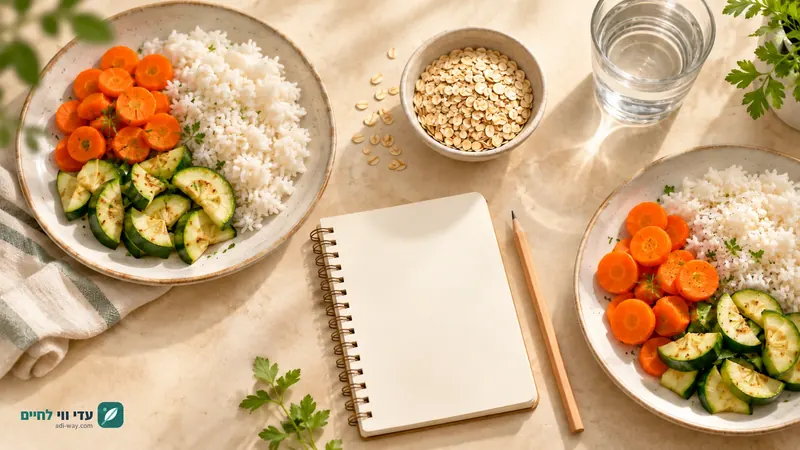
What do you order when you are unsure? Grilled food, rice or a potato, a cooked vegetable, and sauce on the side.
Can you request changes without being "the difficult customer"? Yes. Restaurants receive these requests every evening. One polite request is routine.
What about dinner at a friend's home? Let them know beforehand, briefly. Or eat something small first and choose familiar foods from the table.
What if the dish arrives with something you asked to leave out? Ask for a replacement. That is not rude. It is the dish you ordered.
What if pain starts in the middle? Go to the bathroom, breathe, and decide whether to return. There is no obligation to stay until dessert.
The information in this guide is general and is not a substitute for personal advice from a doctor or dietitian.