Butternut Squash: The Star of the Kitchen
Adi Way Editorial TeamPublished:

Butternut squash? An upgraded version of pumpkin!
Today I am sharing two fun, simple butternut squash recipes with you, followed by a little information about this beautiful vegetable, whose shape somewhat resembles a woman's body.
Recipe 1: Butternut squash porridge
Purpose: a light, nutritious breakfast or dinner, offering variety beyond traditional muesli or oatmeal.
Suitable for: healthy people, the health-conscious, and people with inflammatory bowel disease at any stage
Ingredients:
Half a medium butternut squash, washed; peeling is optional
A pinch of cinnamon, 1/2 teaspoon sea salt
Brown sugar / molasses / honey to taste
Variation: 1 tablespoon raisins / cranberries, rinsed and soaked in hot water for a few minutes
A medium pot about 1/3 full of boiling water
Method:
Slice the squash into rounds, remove the seeds, and steam in the water until soft
Drain the water (it is recommended to use this water for soup or rice. All the minerals will be retained!)
Gently remove the peel (this is much easier than peeling it before cooking!).
Mash as you would potatoes, or cut into pieces, and sprinkle with cinnamon and your sweetener. Enjoy, and here's to your health!
Recipe 2: Baked butternut squash and rice
Purpose: a nutritious lunch or dinner.
Suitable for: healthy people, the health-conscious, and people with bowel disease in the "yellow" and "green" stages.
Ingredients:
A whole butternut squash, washed but unpeeled, halved lengthwise and seeded
White rice, cooked
1 tablespoon olive oil
1 tablespoon natural soy sauce (without preservatives)
1/2 cup raisins / cranberries soaked in boiling water
1/2 cup blanched, peeled almonds, lightly crushed
Method:
Steam the squash in a wide pot to preserve its shape
Drain the water
Heat the oven to a medium-high temperature
Place enough rice to fill both squash cavities in a bowl,
and mix with the soy sauce, olive oil, raisins, and almonds
Fill the cavities in the squash halves, place in the hot oven, and bake for about 15 minutes until all the ingredients come together.
Serve garnished with a parsley leaf.
Note: the peel can be edible. It is rich in dietary fiber and is therefore suitable only for those with a completely healthy digestive system.
Possible variations: brown rice, quinoa, or pearl barley can replace white rice.
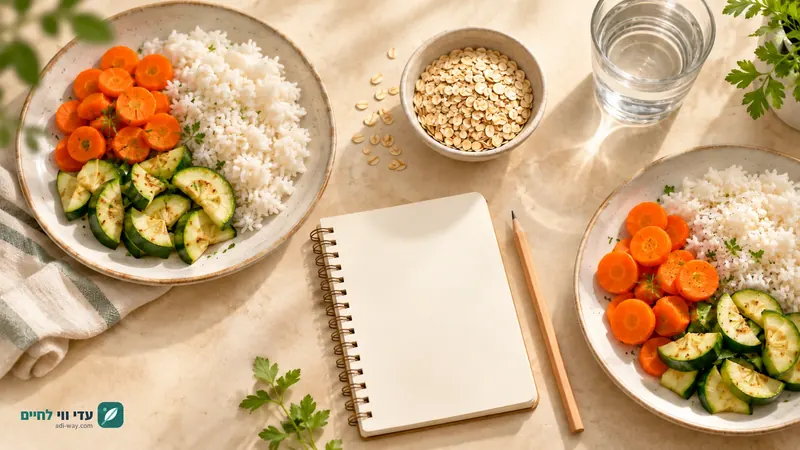
Instead of raisins and almonds, use other vegetables, such as green peas and diced carrots and zucchini
(Recipe inspiration: Liora Goldberg)
Why butternut squash?
Butternut squash is an orange vegetable, meaning it is rich in provitamin A = carotenoids. These substances have anti-inflammatory and antioxidant effects,
and it is also rich in B vitamins, such as B3 (niacin, helpful for lowering blood cholesterol), B6, and folic acid, which work together to improve vitality,
and improve digestive and nervous system function. Vitamin E, the essential antioxidant, is present too.
Butternut squash is also rich in essential minerals such as potassium, magnesium, and calcium.
It also contains a modest amount of dietary fiber, 2 g / 100 g, which becomes relatively easy to digest after cooking.
This is general news information and is not a substitute for personal advice from a doctor or dietitian.