
Spicy Food and a Sensitive Gut: Your Stomach Remembers Even When Your Mouth Wants More
Adi Way Editorial TeamPublished:
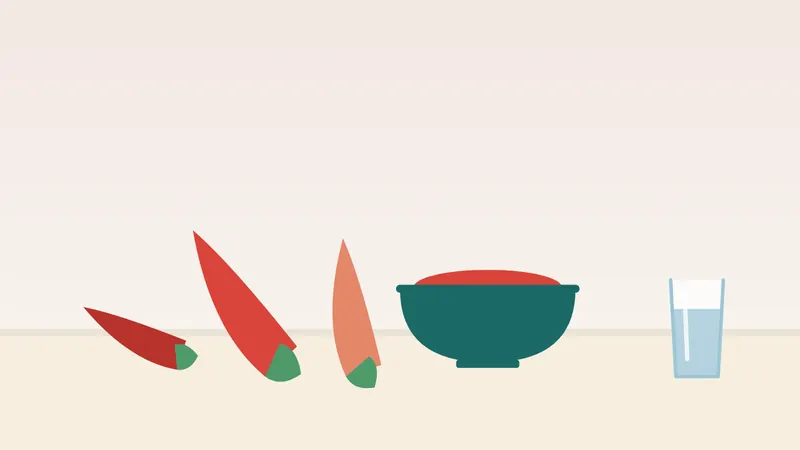
The first bite is quiet. By the third, it is a decision. For some, chili calms the mind and inflames the gut. Others feel nothing. Articles promising that spicy food "burns calories" tend to skip the bathroom.
Spicy food is no test of bravery, and your gut is unimpressed by whoever conquered the dish. The only question is what it does to you, and when.
Why it hits afterward, not during
Capsaicin, the substance giving chili its heat, speeds gut movement in some people and stimulates heat and pain receptors throughout the journey. Your mouth adapts quickly. Your gut has not voted yet.
"It was fine at the restaurant" therefore does not close the case. The following hour and morning do. People who react to spicy food know the sensation: the meal ended long ago, but the heat keeps moving.
A small portion is no insult
Hot sauce on the side, one bite, then stop. Mix the spice into everything and you cannot remove it later. Add it on the side and you control the amount.
During active bowel disease, this is not an experiment at all. It burdens tissue already working hard. During remission, trying one serving in a quiet week is enough to learn. Not the evening before a flight or at a wedding.
Heartburn masquerading as character
Heat rising in the chest after a spicy meal is not always "just the spice." New or frequent heartburn, nighttime waking, or difficulty swallowing warrants a doctor's appointment. Not another glass of milk.
What happens the next day
Some people feel the spice at the next bowel movement too, as burning or discomfort. This is familiar and usually passes. What should not pass silently: blood, persistent pain, or diarrhea that will not stop. With frequent bowel movements, drinking becomes part of care. We discuss sips, salt, and dehydration signs in hydration and inflammatory bowel disease.
Spice that does not look spicy
Not all spice arrives with a warning. Seasoning blends, prepared sauces, marinades, and dishes from other cuisines sometimes combine chili and garlic, making it hard to tell which caused the problem. If something bothers you, test one ingredient at a time. This rule applies to every gut experiment, including fiber, as explained in fiber and IBS.
What remains on the plate without it
Flavor does not come only from heat. Vinegar, lemon, black pepper, fresh herbs, cumin, sweet paprika. You can build a dish with character without the gamble.
If you miss spice, reintroduce a drop in a home-cooked dish whose ingredients you know precisely. Not on an evening when the kitchen is outside your control.
If you enjoy spice without reacting
Great. There is no reason to stop. This article favors understanding, not banning spice. If your gut accepts chili, keep enjoying it. If it complains, you have permission to listen without feeling weak.
This is general news information and is not a substitute for personal advice from a doctor or dietitian.



