
Tom Minkov and Recovio in Rishon LeZion: Pain Care That Also Looks at the Night
Pain that returns again and again does not stay in one part of the body. It enters the night, work, and mood. At the clinic Tom Minkov founded in Rishon LeZion, pain is considered alongside what happens around it, especially sleep.
Adi Way Editorial TeamPublished:
Some pain can be pointed to. Other pain long ago stopped being just a spot in the back or shoulder. It decides when you get up, how you sit through a long meeting, and how much energy remains at the end of the day. Those who live with it know that sometimes the most exhausting thing is not the pain itself. It is the effort of explaining it, again, to someone in a hurry.
Recovio is a pain clinic founded by Tom Minkov in Rishon LeZion. Its approach considers pain alongside what happens around it, especially at night. Sounds obvious? In practice, this connection is often overlooked.
Pain is not just a location. It is a story too
When it began. What makes it worse and what helps. What it looks like in the morning and in the evening. What has already been tried, and what only exhausted you. These questions sound basic, but they distinguish treatment aimed at a spot from treatment aimed at a person.
Persistent pain changes habits. It shortens walks, gives up workouts, and sometimes compresses the whole day around the least painful position. Looking only at the painful spot misses everything that has developed around it.
When pain will not let you sleep
Pain and sleep are a stubborn pair. A bad night increases pain sensitivity, and pain wakes you in the middle of the night. It is a cycle that can be hard to leave alone.
The clinic offers support based on CBT-I, cognitive behavioral therapy for insomnia, in situations where pain and sleep affect each other. This connection does not always receive attention in pain care, which is precisely why it is worth noticing: someone who sleeps better begins each day with more energy to cope.
A room designed to help you slow down
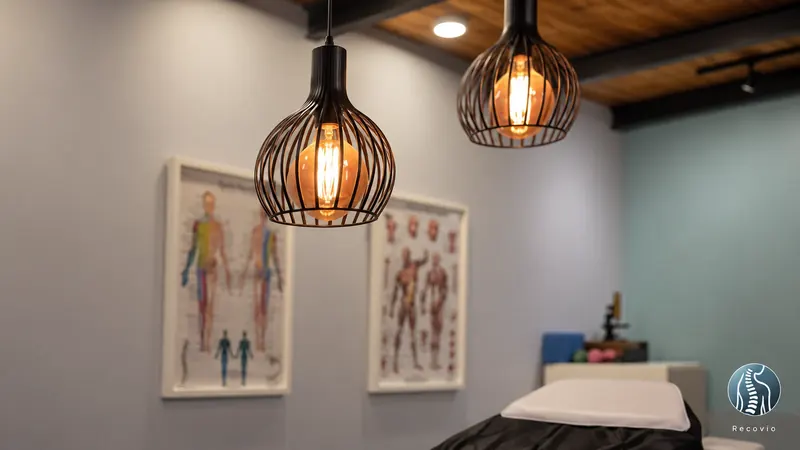
The clinic has a quiet treatment room with warm lighting and a treatment table. It sounds like a small detail. It is not. Someone arriving in pain is already tense enough, and the environment should not add to that.
Hours that also suit people who work
Pain does not wait for time off. That makes the hours meaningful. The clinic operates Sunday through Thursday during the daytime, 08:00-15:00, and also on Sunday, Tuesday, and Thursday evenings, 18:00-22:00. The address is 18 HaHalmonit Street, Rishon LeZion, with parking behind the clinic. Phone: 058-7858708.
What to bring to the first appointment
You do not need a thick medical file. A week of brief notes is enough: when pain appeared, how strong it was, what you did that day, and how you slept the night before. A list of medications and supplements you take, and what you have already tried. And one question that matters especially to you.
With a list like this, the first appointment starts in the right place. Not with "Where does it hurt?" but with "How does this pain live with you?"
No magical promises, but a clear direction
Pain treatment is a process, not a button. Anyone promising to make persistent pain disappear immediately is promising more than is possible. What is possible: understanding better what is happening, building small steps you can sustain, and checking what changes.
Some situations should not wait for any treatment. New, severe pain after an injury, pain accompanied by fever, weakness or numbness in the legs, or a change in bladder or bowel control are reasons to see a doctor immediately.
It is worth getting to know the clinic's treatments and contact options in advance. Someone whose pain has already become a constant companion can arrive with one simple question: what is the next step?
The information in this article is general and does not replace diagnosis or personal medical advice.



