Peanuts and Brain Health: What the New Insulin-Response Study Really Shows
According to an announcement about a Maastricht study, eating peanuts changed an imaging measure of the brain's response to insulin in healthy adults. This suggests a possible mechanism, but does not yet prove better everyday memory or prevention of dementia.
Adi Way Editorial TeamPublished:
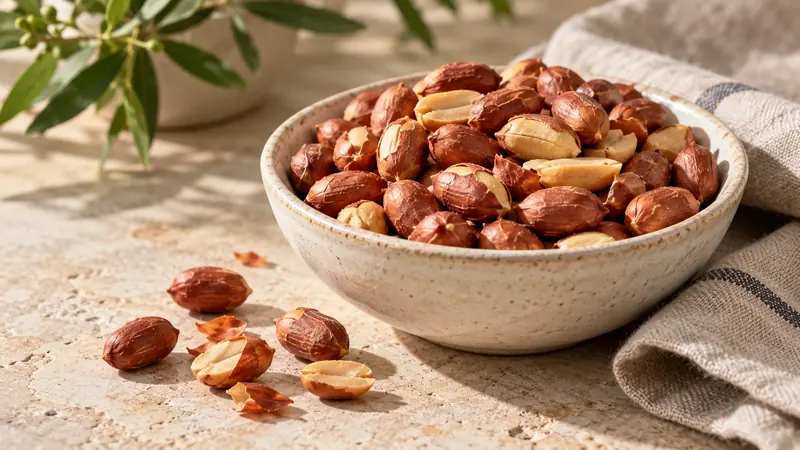
A study of peanuts and brain health offers an intriguing finding this week, with implications narrower than a promise of memory-enhancing food. According to an announcement from The Peanut Institute dated October 5, 2026, republished on BrightSurf, researchers at Maastricht University Medical Center found a change in insulin response in certain brain regions after peanut consumption. The announcement states that the paper was published in Food & Function on September 30.
What was measured in the brain
The response was assessed through changes in blood flow after insulin was administered through the nose, using MRI. According to the announcement, the change found on the right side of the brain included memory-related regions, among them the hippocampus. The researchers interpreted it as a favorable change in insulin response.
This measurement concerns a physiological response. By itself, it does not show that someone remembers an appointment better, finds their way more easily, or has a lower risk of developing Alzheimer's disease. Connecting an imaging marker with a benefit felt in daily life also requires clinical measures and appropriate follow-up.
The previous trial explains the context
The new publication follows earlier work by the same research group. The previous paper, published in Clinical Nutrition in November 2025, described a randomized crossover trial in 31 healthy people: each participant underwent a 16-week period with 60 grams of peanuts a day and a control period without peanuts. There was an eight-week break between periods.
The peanuts were roasted, unsalted, and retained the thin brown skin around the kernel. This does not mean the hard outer shell. It describes the food tested, not a basis for assuming any peanut snack or commercial spread would produce the same result.
That 2025 paper reported increased overall cerebral blood flow and improvement on a particular verbal-memory task. The difference in delayed recall averaged 1.4 correctly recalled words. No benefit was found in executive-function or psychomotor-speed measures. The earlier result is therefore not equivalent to an overall improvement in all thinking abilities either, and should not be presented as this week's new discovery.
Another study found no cognitive improvement
The picture is not uniform. Another trial, published in Frontiers in Nutrition on August 21, 2026, examined adults with overweight or obesity, cardiovascular risk factors, and memory complaints. The final analysis included 27 participants.
After 12 weeks, the researchers found no significant difference between the peanut and control groups in cognitive function or brain activation during a memory task. That trial provided peanuts and peanut butter, and its population and protocol differed from those in Maastricht.
This is not a direct comparison that invalidates either study. It is a reason to avoid a broad conclusion about everyone: a result in healthy people does not automatically apply to people with memory complaints, and one measure does not replace another. The trial finding no difference was also small, so it does not prove that peanuts have no effect of any kind.
Who funded it, and what to take from the story
According to the announcement about the new study, funding came from The Peanut Institute Foundation, which did not participate in the design, conduct, analysis, or writing. This is a statement from the publishing organization and should be presented alongside the results.
For anyone who enjoys peanuts, the research does not turn the trial quantity into a personal target. It offers no basis for replacing treatment or promising that daily consumption will prevent memory decline. The distinction between a research question and nutritional advice matters especially when an appealing headline circulates without details of the participants and measurements.
Anyone allergic to peanuts should continue avoiding them according to their care instructions. The British health service, NHS , lists peanuts among common food allergens, which can cause severe reactions. A finding about the brain does not change that risk.
When reading nutrition research, look for three details before changing a habit: who participated, what exactly changed, and whether the change was also tested outside the laboratory. In this case, the next interesting question is whether the brain measure will be accompanied by consistent benefits in larger studies.