
Sugar after the holidays: where it hides beyond the cake
Adi Way Editorial TeamPublished:
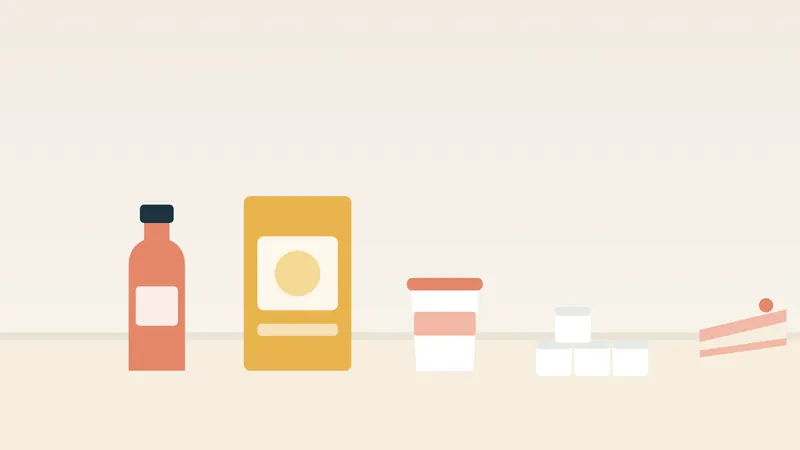
A week after the holiday, the table returns to everyday life, and it feels as though sugar has been left behind. The cakes are gone. The honey is back on the top shelf. We are done.
Except that the basket still contains things whose sugar looks nothing like dessert. Yogurt with fruit at the bottom. "Natural" granola. Salad dressing. An oat drink. An energy bar bought for work. Try to balance the holiday with a one-day fast without looking at the basket, and you are back to the same load by the midmorning meal.
The cake was only the visible part
During the holidays, sugar sits invitingly on the table. Afterward, it hides inside products bought as "healthy" or "practical." This is not a conspiracy. Sugar improves texture, balances acidity, and extends shelf life, so it appears in unexpected places. The result: someone who has not touched cake that day can still reach an unplanned amount of sugar.
What to look for on the package
In the ingredients: sugar, syrup, juice concentrate, honey, malt, silan (date syrup), and names ending in "ose." Several different names do not cancel one another out. They add up. The earlier an ingredient appears on the list, the more of it the product contains.
In the nutrition table: sugars per 100 grams, then the serving you actually eat. A 30-gram serving on an 80-gram bag is not what goes into the bowl at seven thirty in the morning. The Ministry of Health's red symbol is not decoration. It indicates the product has exceeded the threshold for sugar, sodium, or saturated fat.
One more trap: a drink with "no added sugar" made entirely from fruit concentrate still supplies free sugars. The sugar was not added. It was simply there from the start.
A reset day is not a plan
A day of vegetables and water after a busy week sounds sensible. In practice, it usually ends in evening hunger and rapidly eating whatever is available. Better to return to regular meals with protein and vegetables and remove one thing: the sugary drink.
That removal is worth more than any cleanse. It does not punish your gut either. For some people, a radical dietary change, even a "healthy" one, brings bloating and changes in bowel movements. The gut likes routine, even when that routine improves.
The yogurt that sold you health
The yogurt shelf is a good example. Some cups with fruit, flavors, and additions contain quite a lot of sugar, alongside promises about good bacteria and digestion. These promises have not always been tested as they sound. We examined what the shelf does and does not prove in yogurt, roads, and probiotics: what the shelf does not prove. Meanwhile, plain yogurt with fruit you cut yourself keeps the quantity in your hands.
What about fruit?
Whole fruit is not the enemy in this story. It contains fiber, water, and bulk, and is eaten more slowly than a glass of juice. Juice, even entirely natural juice, counts as a source of free sugars in many dietary guidelines, just like a sugary drink. Dried fruit is fruit that has lost its water: a small handful looks innocent and contains quite a lot.
Anyone living with a sensitive gut knows fruits differ too: some cause more bloating, especially in large amounts. So the rule is not "only fruit," but fruit you tolerate in an amount you have tested.
Children, bulk boxes, and special offers
In a home with children, sugar arrives in bulk. Individual snacks for parties, three-for-the-price-of-two deals, drinks for lunch bags. None looks like a decision. Together, they are a pantry.
There is no need to declare war at the family table. You can decide sugary drinks will not go into the cart for the next two weeks and see what happens. Children usually adjust faster than parents.
When sugar is not the issue at all
Someone living with bowel disease who can barely eat during a particular period needs calories they can manage. Not a war on sugar. An apple that is not tolerated is not more virtuous than a puree that goes down. Unplanned weight loss during a flare-up is a medical issue, and reducing sugar at that moment may worsen it. Medical context takes priority over an Instagram rule.
The four-in-the-afternoon gap
Much of the day's sugar arrives in one hour: the afternoon, when the last meal was long ago and the next is still far away. Arrive at that hour ravenous and you will almost always choose something sweet. The answer is not willpower. It is a little planning in the morning. We wrote about which snack sustains you until home in the four o'clock snack: why hunger arrives before dinner.
One habit for two weeks
Replace one drink a day with water, sparkling water, or unsweetened tea. Not the whole pantry. Not the whole family. One drink.
After two weeks, check whether hunger and bloating changed. If so, continue. If not, look for the next source. Do not add a prohibition. Add a test.
This is general news information and is not a substitute for personal advice from a doctor or dietitian.



